Sufi Music  ●  Sufi Videos    Sufi Art  ● Sufi Literature 

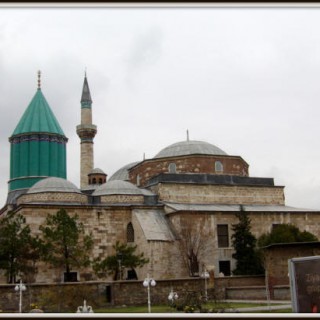
A pilgrimage to Maulana Rumi Mausoleum (Mevlana Museum), Konya, Turkey


When speaking of Mevlana Rumi, I cannot think of a better eulogy as paid by Allama Iqbal in Bal-e-Jibreel (The Wings of Gabriel) to his spiritual master.


يورپ سے ايک خط

ہم خوگر محسوس ہيں ساحل کے خريدار

اک بحر پر آشوب و پر اسرار ہے رومي

تو بھي ہے اسي قافلہء شوق ميں اقبال

جس قافلہء شوق کا سالار ہے رومي

اس عصر کو بھي اس نے ديا ہے کوئي پيغام؟

کہتے ہيں چراغ رہ احرار ہے رومي


جواب

کہ نبايد خورد و جو ہمچوں خراں

آہوانہ در ختن چر ارغواں

ہر کہ کاہ و جو خورد قرباں شود

ہر کہ نور حق خورد قرآں شود

Translation: 

A LETTER FROM EUROPE

 We venture not beyond the shores—

Being to the senses confined.

But Rumi is an ocean,

Stormy, mysterious.


Iqbal! You, too, are moving

In that band of men--

That band of men of passion,

Of which Rumi is the guide,


Rumi, they say,

Is the guiding light for freedom;

Has he, indeed, a message,

For the age we live in?


(Mevlana Rumi’s) REPLY

‘Eat not hay and corn like donkeys;

Eat of your choice like the musk-deer;

He dies who eats hay and corn,

He who eats God’s light, becomes the Quran.’


Below is my account of the pilgrimage to the tomb of Maulana Rumi (known as Mevlana Museum) in Konya in December 2010. The reason to share this is that it may be useful for anyone who wishes to pay a visit to the greatest mystic. It was such an immense and undeserved honour to be invited to this sacred site.

Mevlana Rumi’s Urs takes place between 9-13th December every year in Konya, which is key event for this beautiful small city. The Turkish word Mevlana is a derivation from Arabic/Persian Maulana, which means ‘our master’. The word Urs is a derivation from the Persian word Uroos, which means a Bride. Urs is celebrated on the day saints or sufis passed away to unite with their Lord, thus calling it the night of wedding or companionship.

It reminds me of an story I read in the prelude of my copy of Masnavi, which is translated into Urdu by Qazi Sajaad Hussain. It is narrated, when Mevlana Rumi’s last time arrived, a Hakim arrived for prognosis. The Hakim wept after seeing Mevlana's condition as he realised there is nothing he can do. Mevlana asked him not to weep and remarked, “Can you see that there is only thin veil left behind between the Khaliq (The Creator) and Maklooq (The Creation) now?”.

In terms of itinerary, I took the Meram Express from HyderPasha train station, Istanbul to Konya. You can book advance tickets on the http://www.tcdd.gov.tr/tcdding/index.htm ,however it can be quite confusing. It is almost a 14 hour overnight journey. However, Meram Express is a modern and clean train and comparable to good long haul trains in West.

There are 2 main option for tickets: Pullman which is basically a seat that reclines or a Sleeper which is a private room which two beds, personal sink, fridge with snacks and savouries. There are some useful photos available here on seat61 website. I purchased a Pullman ticket option from Istanbul to Konya which cost Turkish Lira (TL) 28 (= GBP 11) and returned to Istanbul by private sleeper for TL 78 (equivalent to approx GBP 31). I would recommend the sleeper despite it being a little expensive as it is a long journey and can be unconformable on a reclining seat. If you’re travelling on a Pullman, I would suggest bringing blankets and pillow as none are provided. Konya can be quite colder in temperature in winters so warm clothing is a must.

I reached Konya around 8am in the morning. Mevlana Museum is around 3 kilometre but I took a walk to view the city also. A Google map is below to provide direction and it is straight 30 minutes brisk walk.

 
View Larger Map


I do suggest to walk into a few shops to buy souvenirs of Konya which include ceramics of whirling dervishes, small cups for Turkish tea, key rings, fridge magnets, vases etc. Make sure you do a little bargain as Konya is much cheaper for souvenirs compared to Istanbul. I found Shopkeepers in Konya very friendly like Istanbul so be prepared to be asked where you come from, how did you like Konya etc. Shopping in Turkey is a more personal than sticking bar-codes to items as in the West and the usual beeps!

Mevlana Rumi Museum is a key tourist site for this small city so expect a little crowd especially during the Urs time. You will  observe tour buses parked outside which provide guided tours to local as well as international tourists. Mevlana Museum is well organised site and you can get literature in English, Spanish, French and other main languages. I took a guide in Turkish (by error!) which is available below to be downloaded in PDF format.


Tourist Guide of Mevlana Museum (Shrine of Mevlana Rumi) in Turkish language. Click to download a copy in PDF format. Since photography is prohibited within the shrine area, it provides some good photos of shrine and the museum area.


Audio tour guides are a great way to learn since these provide audio commentary for the key highlights of the place by pressing the number associated to it. The garden outside the shrine is called Rose Garden for reason obvious. Konya, like the rest of Turkey, boasts a huge variety of flowers and especially the fruit tastes better than anywhere else.


As you enter the gate of the shrine, you will see graves of many personalities with most having a mevlevi style turban on the headstone. One of the striking one is a tombstone of Allama Iqbal (Muhammad Ekbal), which is not the actual final resting place of the great philosopher but an honour granted to Allama for his immense reverence for Mevlana Rumi, see below.


Honoury grave of Allama Muhammad Iqbal at Mevlana's Shrine. The epitaph translates as ‘this honoury resting place has been granted to Muhammad Iqbal, Pakistan's national poet, by his spiritual master, Mevlana Rumi’

 In Javed Naama, Allama provides his advice to his son, Javed Iqbal:


گر نیابی صحبت مرد خبیر

از اب وجد آنچہ من دارم بگیر

پیر رومی را رفیق راہ ساز

تا خدا بخشد ترا سوز و گداز

زانکہ رومی مغز را داند ز پوست

پای او محکم فتد در کوی دوست

Rought Translation:

If you do not find the company of an enlightened one (mentor of truth)
Then take from me the knowledge, which I attained from my ancestors
Make Rumi your guide for the (true) path you tread
So God bestow on you with ecstasy & frenzy of love
Rumi knows kernel (real) from the shell (superficial)
His feet are firm in the lane of The Friend (God).


Entrance of Mevlana Rumu's shrine. It read 'Ya Hazrat Maulana'


At the main shrine door, you will see ‘Ya Hazrat Maulana’ written at the door, with the following verse in persian Kaa

Kaaba al Ushaaq Ba-en Shud Muqaam ,
Har Ke Naaqis Anja Shud Tamaam

(This is the Ka'aba (mecca) of all Lovers,
It converts an unpure one into a pure one)

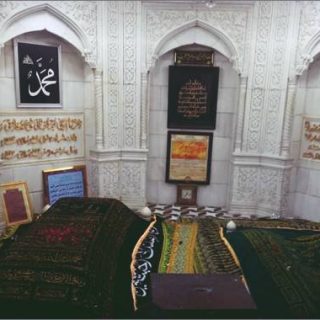
Here you will be given polythene shoe covers as you enter the holy shrines hall. Once in the shrine main hall, you will observe many tombs until you reach Mevlana’s tomb which is represented by the largest turban on its headstone, see below.


Tomb of Mevalan Rumi. The epitaph reads, 'When we have gone, seek us not in our tomb, but in the heart of the enlightened'


You should offered Fatih and Surah Yasin as you will observe many people doing the same. People constantly move in a queue going in both directions which ensures there is constant flow of pilgrims. There is a Mevlana Museum adjacent to the main hall which exhibit texts of Masnavi, musical instruments including Neh and many of Mevlana and other Awliyas’s personal belonging.


As a part of Ataturk reform for modernisation in 1925, Sufi brotherhoods were not allowed to perform the whirling ceremonies publicly and were practically dissolved. Mevlana’s shrine was converted in Mevlana Museum which opened in 1927.In 1954, a special permission was granted by the Turkish Government lifting the ban on Samaa. The tomb of Rumi is now the primary tourist site of Konya attracting pilgrims all over the world who come to pay their tribute and homage to their dear Mevlana.


The Mawlawi Whirling Dervishes of Konya have gained popularity and recognition especially in the West with its eye catching ceremonies. Samaa, as the whirling ceremony is called, is a deeply religious ritual, associated with Mevlana Rumi.

There are 7 key stages which have been explained beautifully at http://www.mevlana.org/sema.html.
 

I retuned back to Istanbul via Meram Express and could not attend the ceremony of whirling dervishes unfortunately which I believe happens in the Rose Garden. This is a beautiful ceremony with much deeper meaning than a physical revolutions. Inshallah, I will provide a more detailed account of this in a separate article later. I met another pilgrim briefly as I reached HyderPasha station whom I recognised immediately from his Mevlana Turban. He visited perhaps all the way from Australia and had intense reverence for Mevlana Rumi. I requested him for blessing and he raised his hands to pray for me. I kissed his hands and said my farewell. It was poignant journey and I felt that despite back in Istanbul, the heart is still in Konya.

I have uploaded a few amateur video on Youtube also, in case they can be helpful.


Iltimaas-e-Dua (request for prayer), if you are one of the fortunate ones to be at this blessed place.

W.
Feb 2011.


Search TheSufi for a song on any keyword here.

Sufi Music
The Largest Free Collection of Sufi Music. 600+ MP3 and growing


The Finest Free Collection of Sufi Art on the Web. 
 

"What Shall I be?". Chose between the resolutions below to download Rumi's wallpaper for your desktop.

(1024 x 786 pixel)


Special thanks to the people of Turkey and especially Konyans for their hospitality and help for making this tour a truly memorable one.

Wish to provide suggestions & feedback;
send it via our CONTACT US form here (opens in a new window)


THESUFI.COM®2002-2011©